The examples below give some ideas on how aggregation rules can be configured to obtain various results.
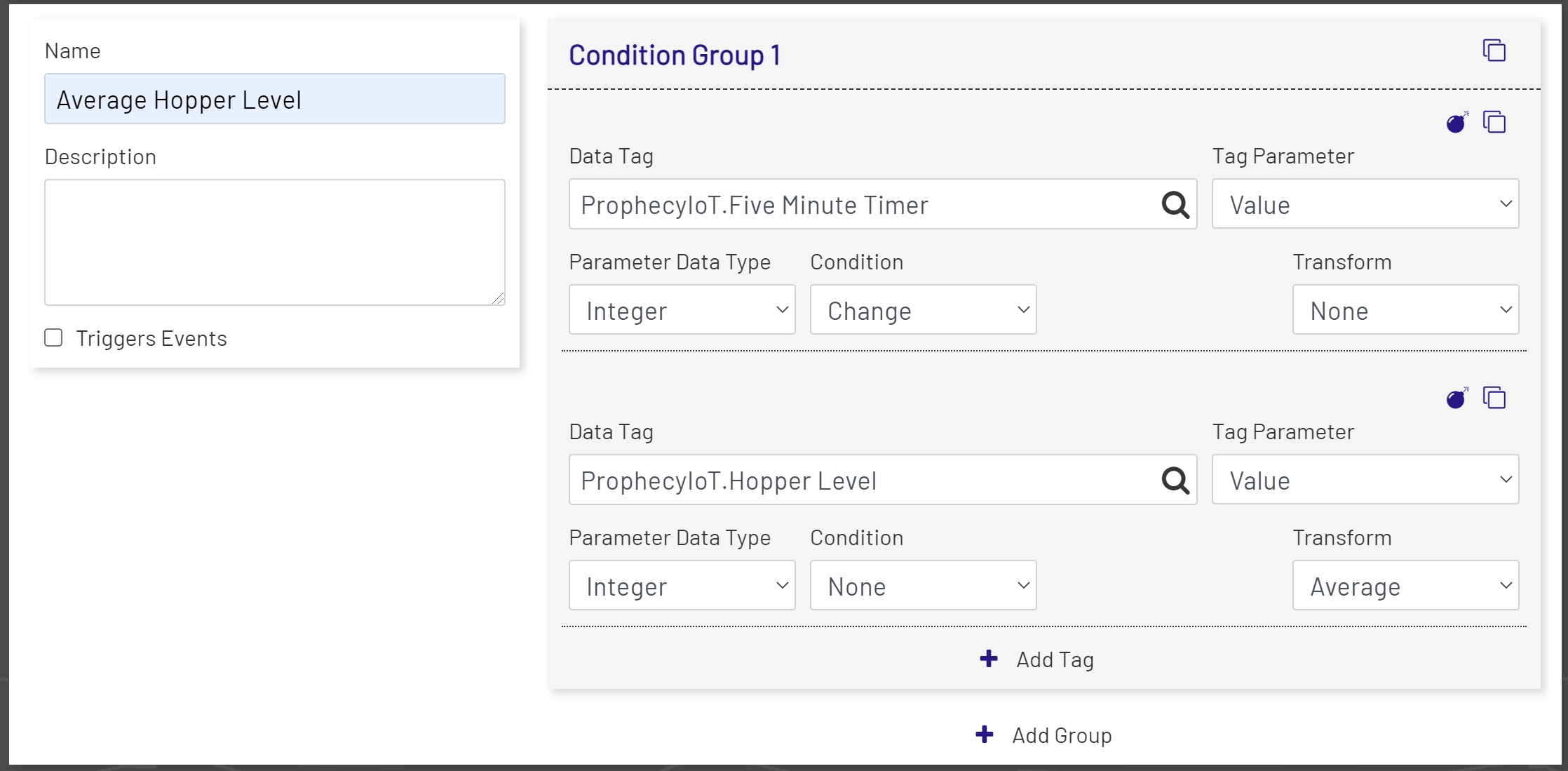
Average Hopper Level
This aggregation depends on a tag configured to change to a new value every 5 minutes. In this case, that value is just increments of 5 from 0 - 60, resetting every hour, but the value is irrelevant. Since the rule is configured to fire whenever that value changes, it can be anything.
Since the second tag rule has no condition set, it will never factor into whether or not the aggregation fires. Whenever the Five Minute Timer tag changes, the average of all of the logged values for the Hopper Level tag between the last time the aggregation fired and now will be written to the aggregation data table.
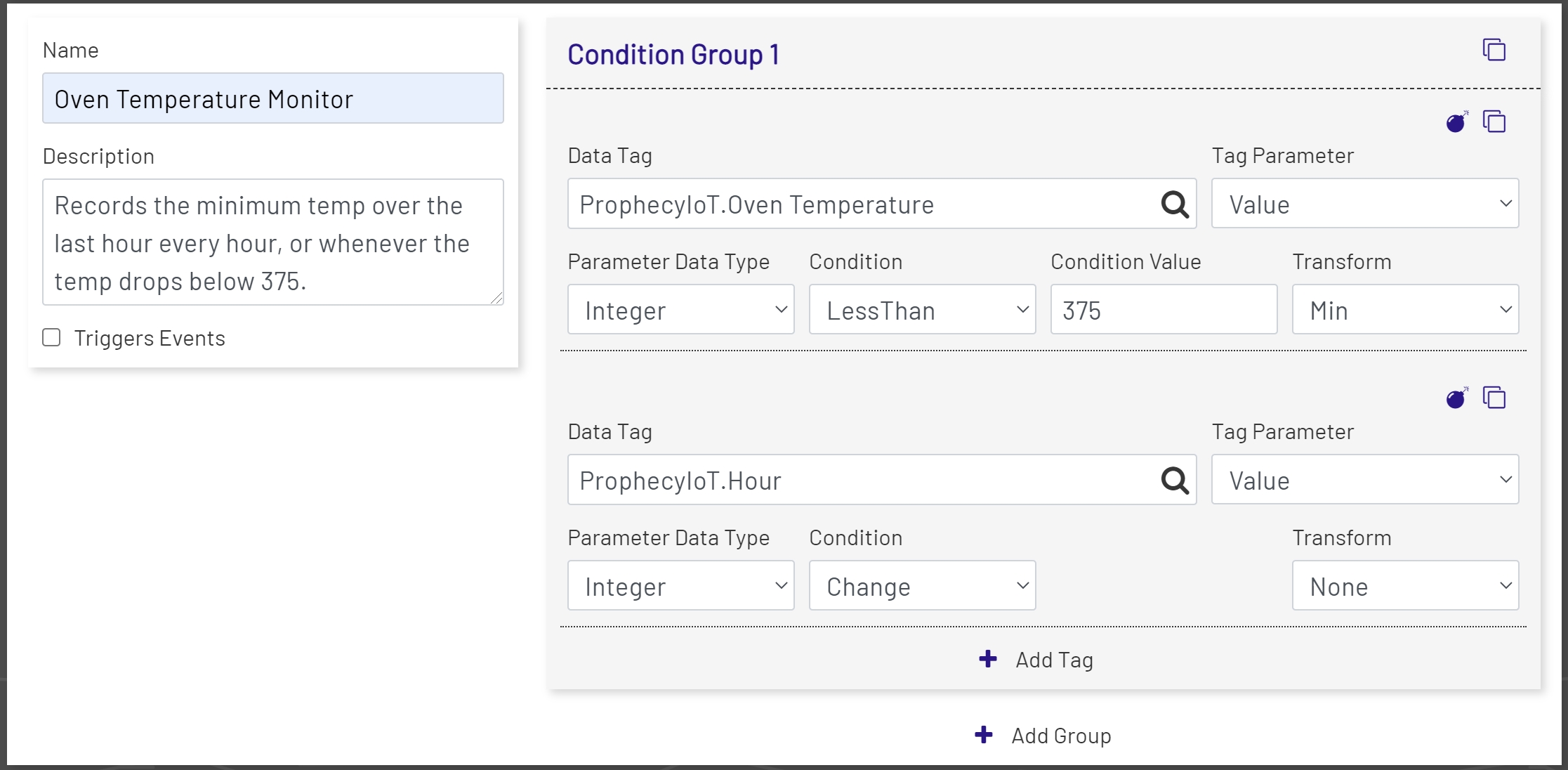
Temperature Monitor
In this example, the oven temperature will be written to the aggregation database once per hour, or sooner if the temperature drops below 375 degrees. Regardless of which condition causes the rule to fire, the 'Min' transform applied to the Oven Temperature tag value will be for the time between when the aggregation last fired and this firing.
Output from this aggregation could be displayed on a Dashboard, or fed to external systems through Events or Webhooks, so an alarm could be raised to check the oven if necessary.